How VAR Technology Is Reshaping Real Football and the Football Gaming Experience
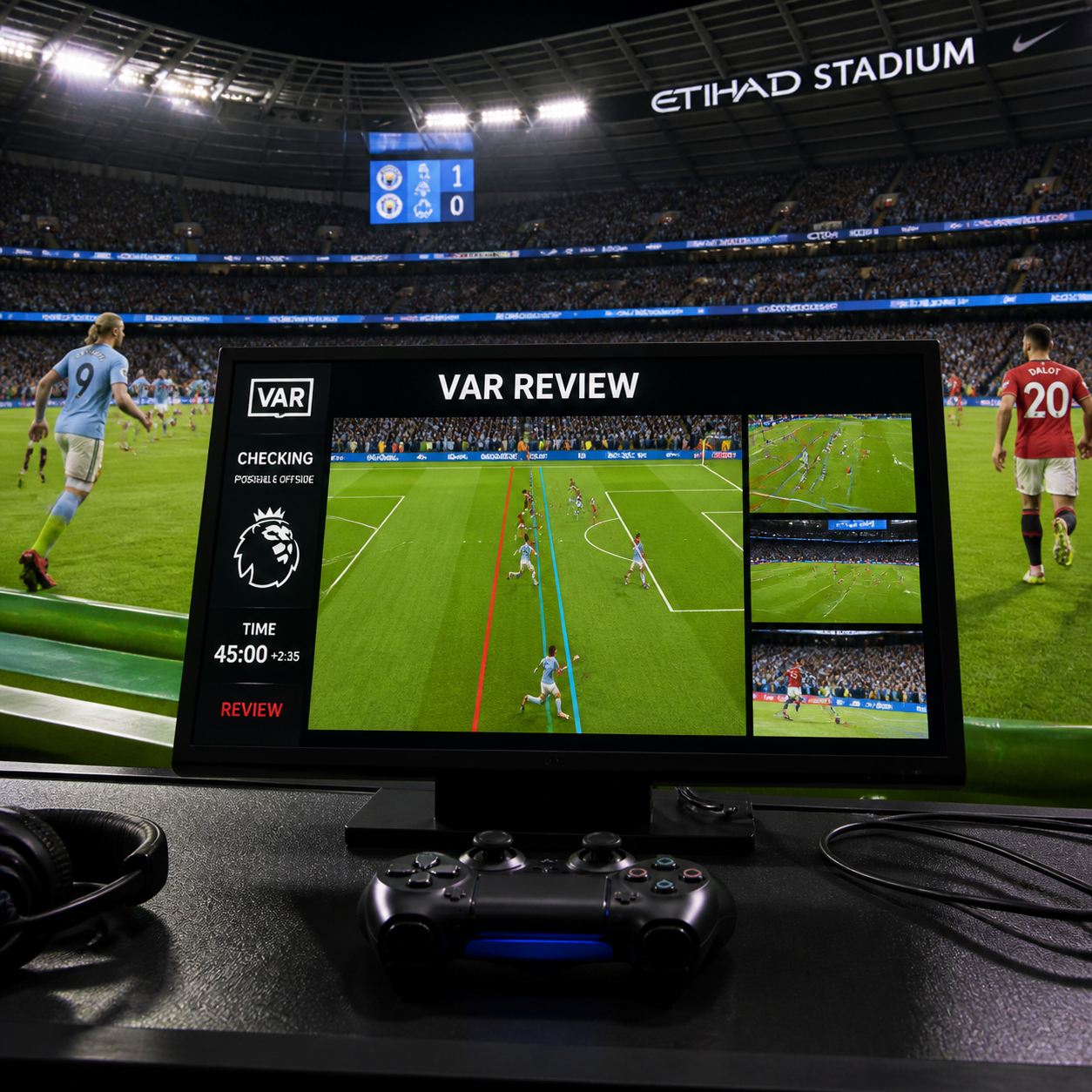
Few technologies in modern football have sparked as much debate as the Video Assistant Referee. Whether you're watching a Premier League match on a Saturday afternoon or grinding through a career mode on EA Sports FC, VAR has become an unavoidable part of the football conversation. It's changed how goals are celebrated, how referees make decisions, and increasingly, how game developers think about realism.
What Is VAR and How Does It Work in Real Football?
VAR is a match officiating system where a team of video referees reviews key decisions made by the on-field referee using multiple camera angles. Introduced to top-level football through FIFA's technical regulations and adopted widely across the Premier League, UEFA Champions League, and major international tournaments, VAR covers four categories of decisions: goals, penalty incidents, red cards, and mistaken identity.
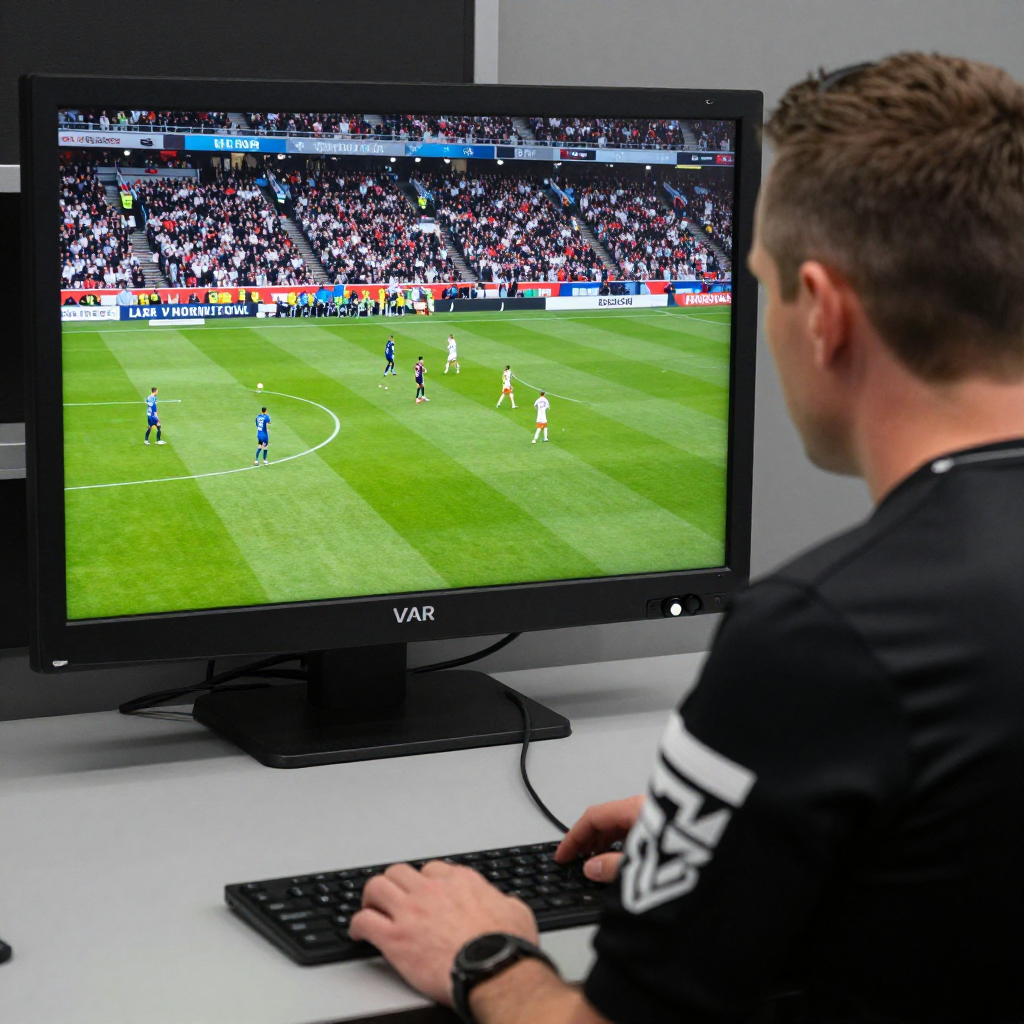
When a potential error occurs, the VAR team in a remote review center alerts the on-field referee, who can either accept the recommendation or walk to the pitchside monitor to review the footage personally. The process typically takes between one and three minutes, though complex decisions — particularly those involving offside detection — can stretch longer.
The technology relies on multiple broadcast camera feeds, and more recently, on Semi-Automated Offside Technology (SAOT), which uses skeletal tracking and AI to plot player body positions with far greater precision than human operators drawing lines on a freeze frame.
The Controversy and Impact of VAR on the Real Game
VAR has genuinely improved accuracy in football — but that accuracy has come at a cost that many fans consider too high. The most obvious impact is the disruption to goal celebrations. A striker wheels away in triumph, teammates pile on, and then everyone freezes, waiting. That suspension of joy has become one of the defining images of modern football.
Statistically, VAR has reduced clear refereeing errors. A FIFA analysis of VAR implementation across multiple competitions found a significant reduction in incorrect match-changing decisions. But critics argue the system creates new problems — marginal offside calls decided by millimeters, inconsistent application across different competitions, and a general sense that football's emotional spontaneity has been sanitized.
The pace of play has also shifted. Managers now factor VAR into tactical decisions. Players have learned to hold runs slightly longer before committing to offside positions. The game has adapted — not always in ways fans enjoy.
From the Pitch to the Pixels — VAR Enters Football Gaming
Football video games have always chased realism, and VAR represents one of the most visible features of the modern game. The challenge for developers is translating a process that's inherently about human review and broadcast footage into a real-time gaming mechanic that doesn't kill the pacing of a match simulation.
Early attempts were basic — a brief cutscene showing a screen review, a short delay, then a decision. But as referee simulation has become a more serious design consideration, both EA Sports and Konami have invested in more nuanced systems. The goal isn't just visual authenticity; it's about making the player feel like they're experiencing the real game, including its frustrations.
The parallel is striking: real football fans complain about VAR ruining the flow of matches, and football gamers complain about the same thing when a goal is disallowed by an in-game review. The emotional response is remarkably similar, which tells you something about how well the simulation is working — even if players don't always appreciate it.
How EA Sports FC and eFootball Handle Referee Technology
The two leading football simulation franchises take noticeably different approaches to VAR and referee AI. EA Sports FC (formerly FIFA) introduced VAR elements progressively, with the system appearing in certain modes and competitions that mirror real-world rules. In practice, the implementation includes brief VAR review sequences for goals and penalties, with the outcome influenced by the game's underlying referee AI rather than any genuine video review.
The referee AI in EA Sports FC has evolved considerably. It now accounts for factors like player positioning at the moment of a pass, contact thresholds for foul detection, and whether an advantage should be played. VAR in this context acts as a secondary check on those calculations, occasionally overturning decisions that the initial AI got wrong — which is a reasonably faithful recreation of how the system works on a real pitch.
eFootball, Konami's free-to-play football simulation, takes a somewhat leaner approach. The game's referee system handles fouls and offsides with solid accuracy, but VAR sequences are less prominent in the overall match experience. Konami has historically prioritized fluid gameplay mechanics over broadcast-style presentation, so VAR tends to be more of a background process than a featured moment.
Neither game has yet implemented anything resembling true SAOT — the skeletal tracking precision that real football now uses for offside calls. That level of simulation would require significant computational overhead and would likely frustrate players with decisions that feel overly technical.
Does VAR Make Football Games More Realistic or More Frustrating?
The gaming community's reaction to VAR mechanics mirrors real-world fan sentiment almost exactly — which is both a design achievement and a problem. Players who have had goals disallowed by in-game VAR reviews often report the same hollow feeling that real football supporters describe. That emotional authenticity is genuinely impressive. It's also a significant source of complaints in online forums and community spaces.
The core tension is this: realism and enjoyment don't always align in football gaming. A perfectly accurate offside call that disallows a goal you scored with a brilliant through-ball feels punishing in a way that a human referee's error somehow doesn't. The randomness of human error is psychologically easier to accept than the cold precision of a system that's technically correct.
Some players resolve this by disabling VAR in settings menus — a feature both major titles offer. Others embrace it as part of the authentic experience. The split in the community reflects exactly the divide among real football supporters, which suggests that game developers have captured something true about VAR's nature, even if they haven't perfected the implementation.
The Future of VAR in Both Football and Gaming
The trajectory for VAR in real football points toward greater automation and speed. Semi-Automated Offside Technology is already operational in the Champions League and at major international tournaments, reducing offside review times from minutes to seconds. As the technology matures, the disruption to match flow should decrease — which may gradually shift fan opinion.
For football gaming, the implications are significant. If SAOT makes real-world VAR decisions faster and less contentious, developers will have an easier time incorporating similar systems without killing game pacing. Next-generation titles could feasibly implement near-instant VAR checks that feel like a natural part of match flow rather than an interruption.
AI-assisted officiating is the longer-term horizon. Systems that can assess contact, intent, and positioning in real time — without human review at all — would fundamentally change how both real football and its digital simulations handle decisions. Whether that's a future fans and players want is another question entirely.
The conversation around VAR, in football and in gaming, is really a conversation about what we want from the sport. Do we want accuracy, even when it's uncomfortable? Or do we want the emotional experience, even when it's imperfect? Football gaming sits right at that intersection, and how developers answer that question will shape the next generation of football simulation.
Frequently Asked Questions
What does VAR stand for and how is it used in football matches?
VAR stands for Video Assistant Referee. It's a system where a team of officials reviews key decisions — goals, penalties, red cards, and mistaken identity — using multiple camera angles to help the on-field referee correct clear errors.
Do EA Sports FC or eFootball games include VAR during matches?
Yes, both titles include VAR mechanics. EA Sports FC features more prominent VAR review sequences for goals and penalties, while eFootball integrates referee decisions more quietly into the match flow. The depth of implementation varies by game mode and competition settings.
Can VAR decisions be turned off in football video games?
In most cases, yes. Both EA Sports FC and eFootball allow players to adjust referee settings, including VAR-related options, in custom match or exhibition settings. Competitive and licensed modes may apply fixed rules that reflect real-world competition regulations.
How does Semi-Automated Offside Technology differ from standard VAR?
Standard VAR uses camera footage and manually drawn lines to assess offside positions. SAOT uses AI-powered skeletal tracking to map player body positions in three dimensions, producing faster and more precise decisions — typically in seconds rather than minutes.
Will future football games simulate VAR more accurately than current titles?
Almost certainly. As SAOT becomes standard in real football and processing power in consoles increases, developers will have both the real-world reference material and the technical capability to implement faster, more precise referee simulation systems that feel less disruptive to gameplay.