eSports Tournaments with Million-Dollar Prizes: Who Won What?

Million-dollar prize pools have transformed competitive gaming from a niche spectacle into a global professional industry. From Dota 2 and its record-setting The International events to the FIFAe World Cup and modern EA Sports FC competitions, the money attached to a championship can be substantial.
There is an important distinction, though: a tournament’s total prize pool is not the same as one athlete’s earnings. Team size, placement bonuses, taxes, agent fees, salaries, and organizational agreements all affect what a winner actually takes home.
What Makes an eSports Prize Pool Reach Seven Figures?
A million-dollar eSports prize pool usually comes from several funding sources combined, including publisher investment, sponsorships, ticket sales, media rights, and sometimes player-supported crowdfunding.
Publishers often provide the foundation. A large prize pool helps attract elite esports athletes, creates international attention, and gives a game a stronger competitive identity. Sponsorships then add commercial value through brands seeking access to a highly engaged audience.
Some competitions also use in-game purchases. The International became especially known for crowdfunding through The International Battle Pass, with a portion of qualifying sales added to the championship pool. This model could produce spectacular totals, although it also made the final figure dependent on player spending and the publisher’s rules.
- Publisher funding: direct investment from the game developer or platform owner.
- Crowdfunding: revenue from in-game items, passes, or supporter bundles.
- Sponsorships: payments from technology, beverage, apparel, financial, or entertainment brands.
- Event revenue: ticketing, merchandise, media rights, and licensing.
- Revenue sharing: arrangements that may support teams, leagues, or participating organizations beyond prize money.
A large pool signals ambition, but it does not automatically prove that an ecosystem is sustainable. A smaller recurring league with reliable salaries may offer players more stability than a single event with an enormous headline figure.
The Biggest Million-Dollar eSports Tournaments
The International has offered the clearest example of an exceptionally large eSports prize pool, while events such as the Fortnite World Cup, the League of Legends World Championship, and major Counter-Strike tournaments have also created landmark payouts.
| Tournament | Game | Notable winner | Prize context |
|---|---|---|---|
| The International 2018 | Dota 2 | OG | More than $25 million total; OG won roughly $11.2 million as a team |
| The International 2019 | Dota 2 | OG | More than $34 million total; the champions received roughly $15.6 million as a team |
| Fortnite World Cup Finals 2019 | Fortnite | Kyle “Bugha” Giersdorf | $3 million for the solo champion |
| League of Legends World Championship | League of Legends | Various championship teams | Million-dollar pools, with figures varying by year and revenue model |
| Major Counter-Strike events | Counter-Strike | Various championship teams | High-value prizes supplemented by salaries and team contracts |
The figures above illustrate different models. OG’s The International victories produced enormous team payouts divided among five players and their organization. Bugha’s Fortnite World Cup victory was an individual result, so the advertised $3 million first prize was much closer to a single competitor’s headline award, before taxes and expenses.
Prize figures can change depending on whether a source reports the announced pool, the final crowdfunded amount, or the money distributed after adjustments. Reliable comparisons should therefore identify the year, the tournament format, and whether the number refers to the whole event or first place.
Who Won the Most?
OG’s back-to-back International championships made its 2018 and 2019 roster one of the most financially successful teams in eSports history, but individual rankings require careful interpretation.
At The International 2019, OG’s winning payout was roughly $15.6 million for the team. Divided equally among five players, that would represent about $3.1 million per player before organizational shares, taxes, and other costs. The calculation is useful, but it is not necessarily the final amount each competitor received.
Individual champions can also appear higher in earnings lists because they win solo tournaments. Bugha’s $3 million Fortnite World Cup prize, for example, was attached to one player rather than a five-person lineup. Meanwhile, career earnings databases may include dozens of tournaments, team bonuses, salaries, and special events, making direct comparisons difficult.
How to compare winners fairly
- Compare team prize money with team prize money when the event is team-based.
- Separate first-place winnings from total career earnings.
- Check whether the reported number is gross prize money or an estimated personal share.
- Account for the number of teammates and any organization agreement.
- Use the same currency and year where possible, since exchange rates affect comparisons.
The most defensible conclusion is often narrower than a definitive richest-player claim: certain champions won the largest publicly documented tournament awards, while total personal wealth is rarely transparent.
Million-Dollar Prizes in Football Games
Football-game esports can offer major prizes, but FIFAe World Cup and EA Sports FC competitions generally use smaller, more individually focused structures than The International.
The FIFAe World Cup, formerly associated with the FIFA Interactive World Cup, brings elite players together in a football simulation format. EA Sports FC competitions have continued that competitive tradition through global qualification routes, regional events, and finals involving leading players from the game’s competitive scene.
Unlike Dota 2’s five-player championship format, football games usually emphasize individual performance or small-team modes. That changes the meaning of a prize. A $100,000 or $250,000 award in a football-game final may go primarily to one champion, while a much larger Dota 2 prize pool is divided among a roster and its organization.
Football-game prize structures also reflect a different commercial environment. Clubs, football governing bodies, publishers, sponsors, and broadcasters may all influence event design. Competitive modes can include one-versus-one play, two-versus-two formats, or club-based competitions, so the winner’s share depends heavily on the rules of that edition.
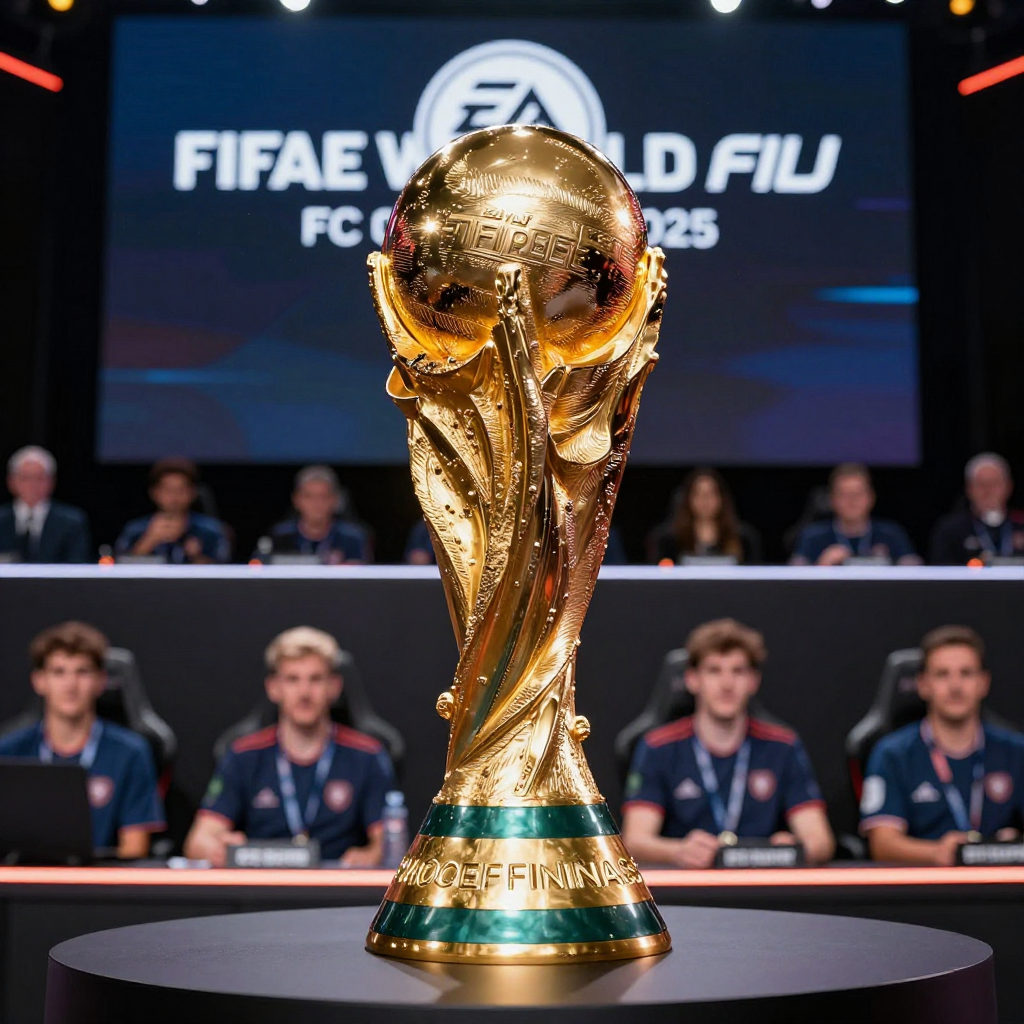
The comparison is therefore about more than the headline number. FIFAe World Cup and EA Sports FC events offer valuable global exposure, but their prize pools should be judged alongside qualification access, player support, broadcast reach, and the strength of the wider competitive circuit.
How Prize Money Is Distributed
A tournament prize pool is divided across placements, formats, and participants, so the champion’s personal earnings may be far below the advertised total.
Most events publish a distribution table before or during competition. First place may receive 30% to 50% of the pool, while the remaining money is allocated to the runner-up, semifinalists, lower placements, and sometimes qualifying stages. The exact percentages vary widely.
From prize pool to personal income
- Start with the placement award. Identify whether the figure belongs to a player, duo, or complete team.
- Apply roster sharing. A five-player championship payout is not one person’s prize.
- Check organizational agreements. Some contracts define how prize money is shared between players and the team.
- Subtract costs. Taxes, travel, coaching, representation, and other professional expenses can reduce net income.
- Separate prize money from salary. A player may earn more from a yearly contract, sponsorships, and streaming than from one tournament.
Tax treatment depends on the player’s residence and the location of the event. Public reports often list gross awards because individual deductions are private. That is why a precise estimate of take-home pay should be treated cautiously.
Why Winning a Major eSports Tournament Matters
Winning a major eSports tournament brings competitive prestige, commercial visibility, and career leverage in addition to cash.
A championship title can help an esports athlete secure a stronger contract, attract sponsors, and gain invitations to exhibition events. For a team, the result may increase merchandise sales, audience growth, and negotiating power with partners.
Success also validates a competitive system. A champion has survived qualification, preparation, travel, tactical adaptation, and high-pressure matches. In football games, that might mean mastering changing versions of EA Sports FC, adjusting to tournament settings, and performing consistently against opponents from different regions.
There are limits. One trophy cannot guarantee long-term income, especially when a game changes its format or publisher priorities. Sustainable careers usually depend on repeat performance, communication skills, content creation, and professional relationships as much as on a single final.
What the Future Could Hold for eSports Prize Pools
The future of eSports prize pools will depend on sustainable publisher investment, audience engagement, and competitive systems that support players beyond one spectacular final.
Publishers may continue testing different models: direct funding, seasonal circuits, digital-item revenue, franchised leagues, and partnerships with sports organizations. Each approach has a trade-off. Crowdfunding can create exceptional peaks, while predictable league funding may provide better planning for teams and athletes.
Football-game esports has room to grow as EA Sports FC develops its global competitive calendar and FIFAe maintains an international identity. Growth will be stronger if organizers improve qualification transparency, regional access, broadcast quality, and player welfare rather than focusing only on the headline prize.
For fans comparing eSports tournaments with million-dollar prizes, the best question is not simply who won the largest check. Look at the game, year, format, funding source, distribution table, and the competitive opportunities available after the final. That context reveals what a championship was really worth.
Frequently Asked Questions
Which eSports tournament has offered the largest prize pool?
The International in Dota 2 has historically offered the largest publicly reported eSports prize pools, with the 2019 edition exceeding $34 million. Prize totals can change by year and funding model.
Who has won the most money in eSports?
Several Dota 2 players rank among the leaders in publicly recorded tournament earnings because of The International’s large payouts. Exact rankings depend on the database, date, currency conversion, and whether non-tournament income is included.
How are eSports tournament prizes divided among players?
Individual events pay the champion directly according to their rules. Team events distribute the award among roster members, and contracts may define whether the organization receives a share.
Do football-game esports tournaments offer million-dollar prizes?
Football-game competitions can offer substantial awards, but their prize pools have generally been below the record totals associated with The International. FIFAe World Cup and EA Sports FC prize structures vary by edition and format.
What is the difference between a tournament prize pool and a player’s actual winnings?
The prize pool is the total amount available across all placements and formats. A player’s actual winnings are limited to their placement share, then may be divided with teammates or reduced by taxes, expenses, and contractual arrangements.